
Insights
Your business already has a system. It's just spread across twelve places.

By Steve Feeney, founder of Essential Systems
6 min read
Most businesses I speak to don't think they have a system. They think they have a few bits of software and a way of doing things.
Look a little closer, though, and there's always a system. Enquiries come in, quotes go out, jobs get done and invoices get paid. Things happen in a fairly reliable order. The trouble is that the system isn't in one place. It's spread across about twelve.
What the twelve places usually look like
It tends to go something like this.
Quotes live in a spreadsheet, or a set of Word templates someone saves over each time. Enquiries arrive in a shared inbox, plus a few personal ones. The day-to-day running of jobs happens on WhatsApp. There's a CRM that the sales side uses and nobody else really looks at. The accounts package sits on its own. There's a folder structure on a shared drive that makes perfect sense to the two people who built it.
And then there's the most important part of all: the information held in people's heads. Who promised what to which customer. Which supplier is reliable. What actually happened on that job last March.
None of this is a criticism. Most owner-managed businesses run perfectly well like this for years. You add a tool when you need one, and every choice made sense at the time. It only starts to creak when growth stretches it.
What I learned as a Systems Analyst
I started my career as a Systems Analyst at Shell UK Expro, from 1987 to 1997. Long before I worked in digital marketing, that was where I learned how to look at a business.
The first thing you learn as an analyst is not to start with the software. You start by mapping how work actually flows. Where does a piece of information first appear? Who picks it up next? What do they do with it? Where does it get written down again, and by whom?
You draw it out step by step, in the language the people doing the work actually use. Nearly every time, the map shows things nobody had quite seen, because nobody had looked at the whole journey in one go.
I've been doing a version of that exercise ever since, and it still works the same way today.
The hidden costs of a system in twelve places
When I map how work flows through a growing business now, I tend to find the same three problems.
The same details get typed in again and again. A customer's name, address and requirements go into the inbox, then the quote, then the job sheet, then the invoice. Each time is a few minutes, and each time is another chance for a mistake to creep in.
Follow-ups depend on somebody remembering. The quote that needed chasing on Thursday. The customer who asked for a call back. The certificate that needs renewing. If the right person is busy, off sick or has moved on, it quietly doesn't happen.
You find out too late that a job lost money. The costs are in one place, the hours in another and the invoice in a third. By the time someone pulls them together, usually weeks after the job has finished, it's too late to do anything about it.
Why another app rarely fixes it
The natural response is to buy another app. A better job management tool, a smarter CRM, a new dashboard.
Sometimes that helps for a while. More often it becomes place number thirteen: another login, another subscription and another place for information to live. Many of these tools also charge per user, so the bill goes up every time the team grows.
The problem was never really a lack of software. It's that the pieces aren't connected, and they don't reflect how your people actually work.
What a Business Operations System is
This is why, alongside our marketing and web work, we now build Business Operations Systems.
A Business Operations System, or BOS, is one tailored platform that connects how a business markets, sells, delivers, administers, manages its finances and measures performance.
In practice that means the whole journey lives in one place. An enquiry becomes a quote. The accepted quote becomes a scheduled job. The finished job becomes an invoice. And every step is visible as it happens, so the office, the team on site and the owner are all working from the same picture.
Details are entered once. Follow-ups are prompted by the system, not by somebody's memory. Costs sit against the job while it's running, not weeks later.
Built around how your business runs
Every BOS we build is designed around how your business actually works, not squeezed into a template. We map your business first, in your language, and then shape the system around it.
That doesn't mean starting from scratch or throwing everything away. Where you already have a tool that works well, such as your accounts package, we connect to it rather than rip it out. And the first stage focuses on the area that will make the biggest practical difference, so you're not waiting months to see a benefit.
There are also no per-user licences. Whether ten people use the system or a hundred, the cost doesn't change, so growing the team costs nothing extra. And once the build is paid for, the system is an asset the business owns.
What this looks like in real life
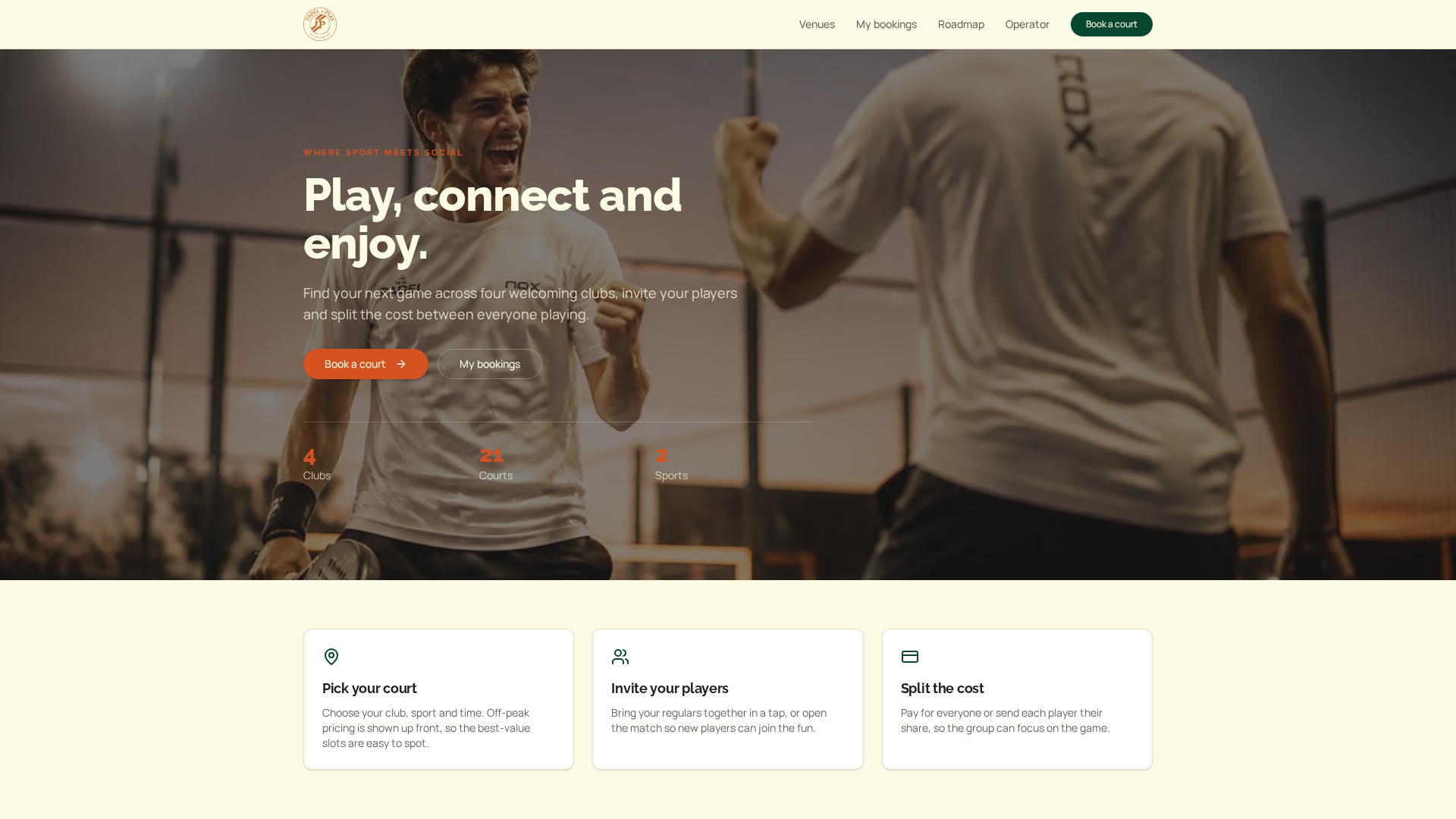
The best example I can give is Padel + Play. It's a complete booking and membership system we built, and still run, for a padel and pickleball operator. Members and guests book courts across four venues in Worcester, Stratford-upon-Avon, Telford and Burntwood. Coaching, events, memberships and payments are all handled in the same system rather than spread across separate tools.
We've also put live demo systems on our website so you can click around them yourself rather than take my word for it. One shows a restaurant and hospitality system, with table-side ordering going straight to the kitchen display and reservations, delivery, stock, staff rotas and reports behind the same login. Another is a complete system for a flooring business, covering jobs, quotes, floor plans, the fitting schedule, vans, stock, purchasing and reports. The flooring one runs on made-up example data, so you can explore without worrying about breaking anything.
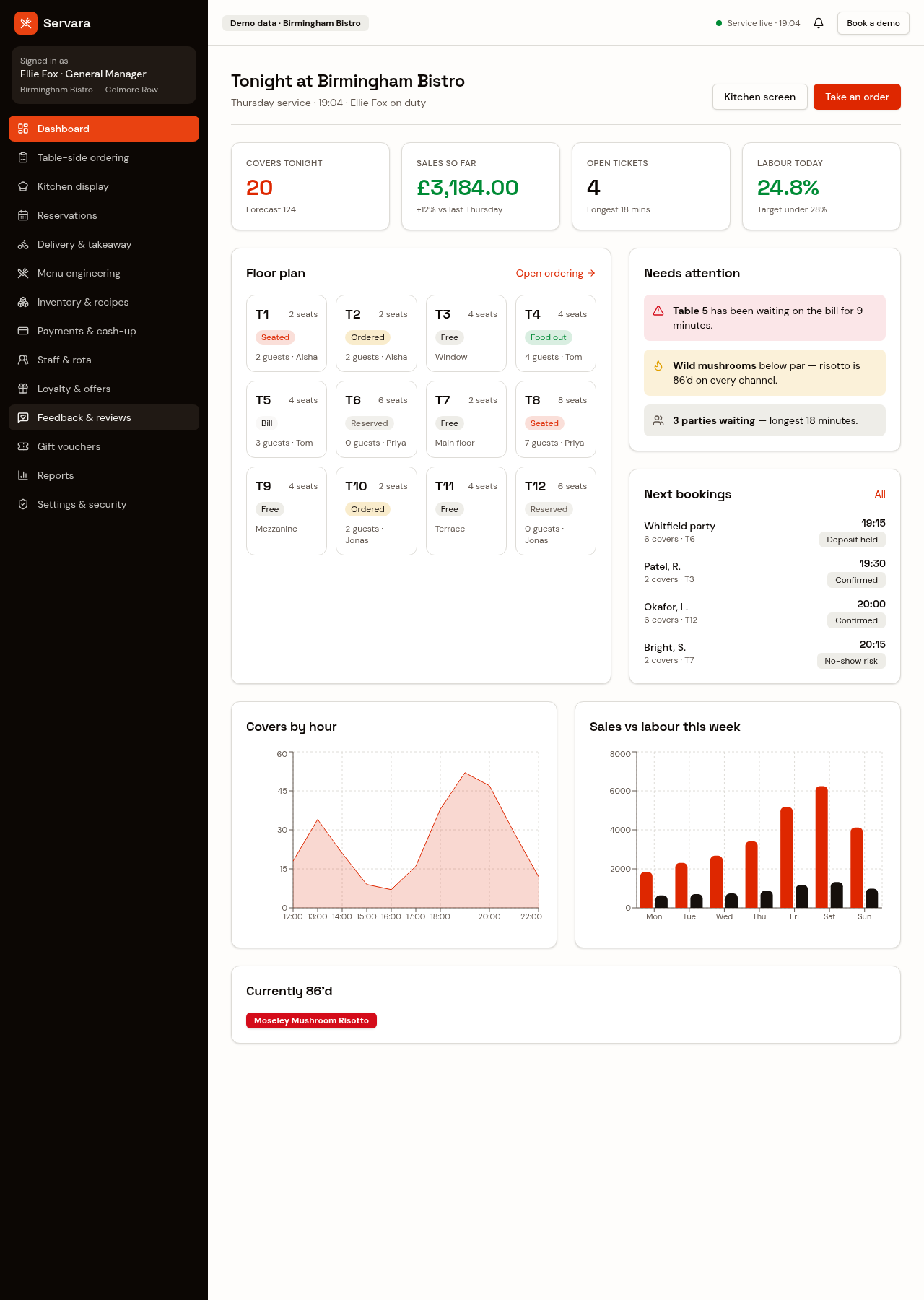
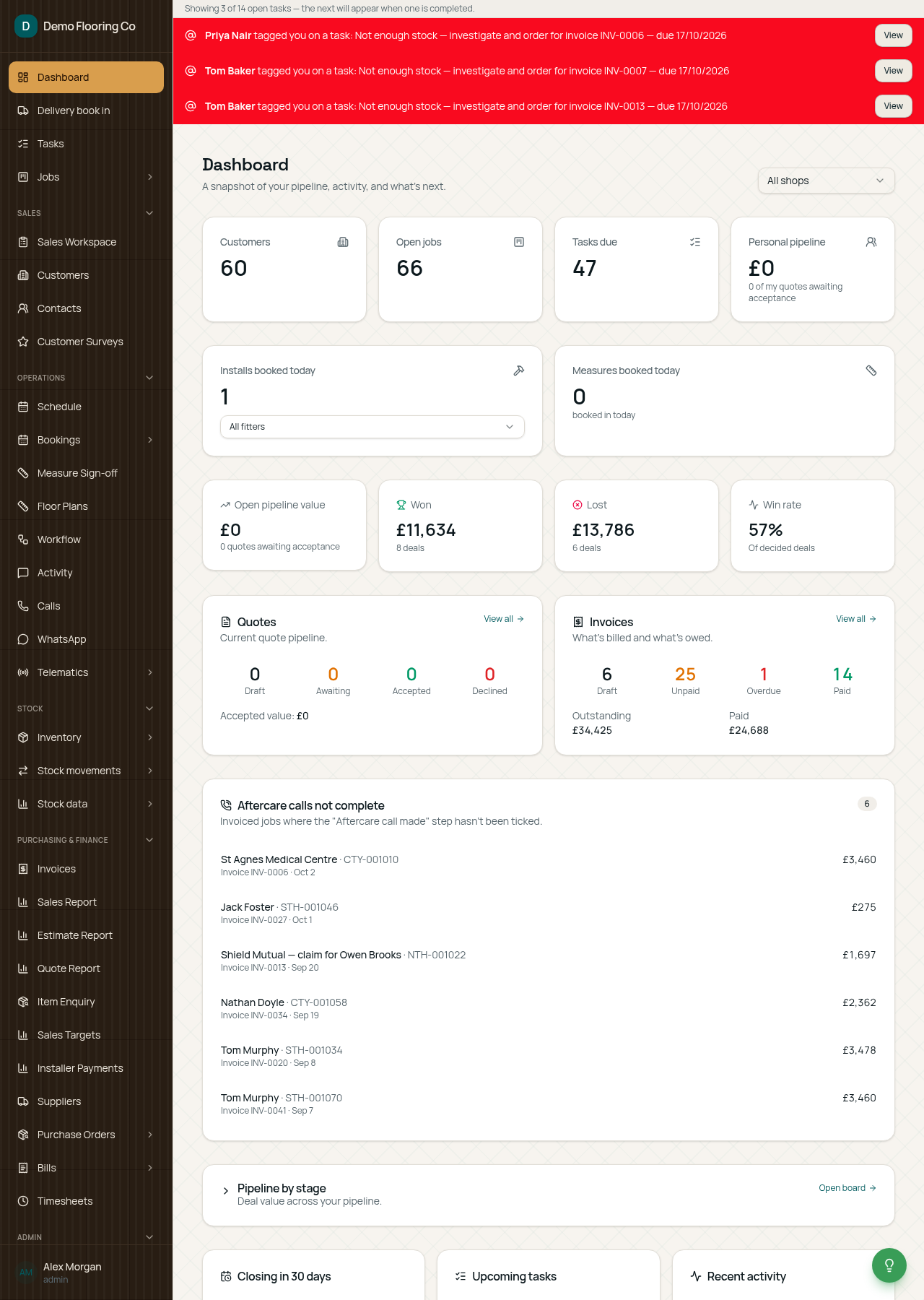
They're working systems, not slideshows. You can open them at essentialsystems.co.uk/demo-systems.
Where to start
If any of this sounds familiar, the first step is simply to look at how work flows through your business today.
Our free Business Operations Review is a short set of questions about how you currently run things. It gives you an initial Business Operations Score and an overview of where information is getting disconnected or retyped. It's not a quotation and there's no obligation. It's there to help you decide whether a deeper conversation is worth having.
Or, if you'd rather just talk it through, get in touch. I'm always happy to have a straightforward chat about how your business works, and we're happy to sign an NDA before any detailed discussion.
Your business already has a system. It might just be time to bring it into one place.